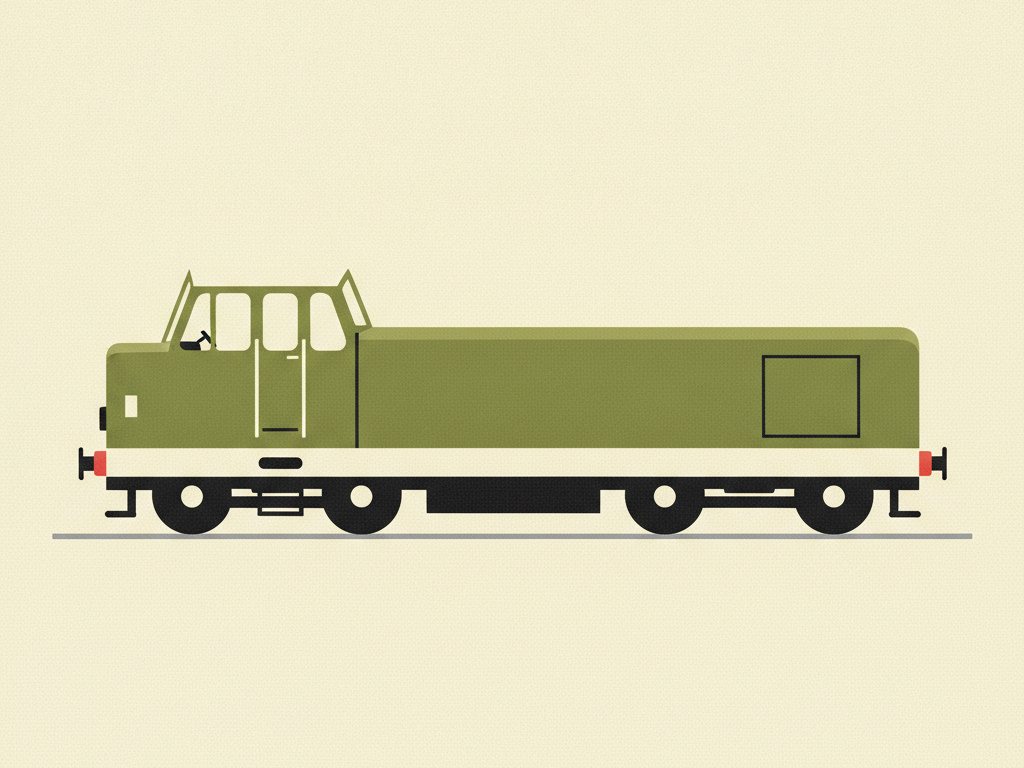
A reader consulting an Ian Allan ABC in the early 1960s would have found this locomotive listed as the English Electric Type 1, a Bo-Bo diesel-electric that the TOPS scheme later renumbered as Class 20. Built with a single cab at one end, it was primarily a freight engine, and its reputation for reliability kept it working long after most of its Type 1 contemporaries had gone.
Design and build
English Electric built around 228 of the type between 1957 and 1968, one of the more numerous of the early diesel designs ordered under the modernisation programme. Power came from the English Electric 8SVT engine, rated at about 1,000 horsepower, driving four axles through the Bo-Bo arrangement. The most distinctive feature was the single cab, set at one end with a long bonnet running ahead of it, which gave the driver an excellent view when running cab-first but a poor one in the other direction.
In service
Because of the single cab, the locomotives most often worked nose-to-nose in pairs, an arrangement that gave a full-width cab view in both directions and doubled the available power for heavier trains. They were used chiefly on freight, and became strongly associated with coal traffic in the Midlands and the north. Enthusiasts knew them as “choppers”, a nickname drawn from the beat of the engine.
Numbering
The class was numbered in the D8000 series. Under the TOPS renumbering scheme of the 1970s the type became Class 20, the identity by which the surviving locomotives are known today.
Withdrawal and preservation
The class proved notably reliable and long-lived, outlasting the other Type 1 designs by a wide margin. A good number have been preserved, and several remain operational, including on charter and departmental work well into recent years. This continued use of a design first built in the late 1950s is unusual and reflects how well the type was regarded.
If a figure here is wrong or you can add an allocation detail, please tell us. Corrections are logged publicly.
- Ian Allan ABC of British Railways Locomotives, Combined Volume, diesel section.
- Standard BR diesel class histories, e.g. Marsden.
- The Class 20 Locomotive Society and other preservation bodies operating the type.